Character design has always been something I’ve been trying to get better at, both in my internship and in my school projects. It usually ends up being the very first thing we do when creating an animation, and the more I work on it, the more I realize how much it shapes everything that comes after.
Professional Responsibilities in Character Design
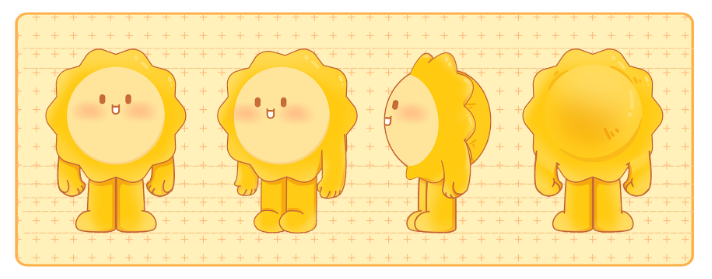
A character designer builds the visual identity of a project. That means developing the silhouette, color choices, turnarounds, expressions, and making sure the design actually represents the story and the brand behind it.
In many animation projects, the character basically becomes the face of the brand, so the design needs to be recognizable and memorable.
From Complexity to Animation-Friendly Design
When I first started, I tried to make characters as detailed and “complete” as possible, thinking that more detail meant better design. But over time, I realized that character design has to consider animation feasibility too.
Every tiny element needs to move convincingly—how it bends, stretches, and reads clearly in just a few frames.
Practical Example from My Internship
In my internship project, which focused on emotional healing, I designed the main character as a little sun. The simple round shape and warm yellow-orange palette felt comforting and, honestly, much easier to animate.
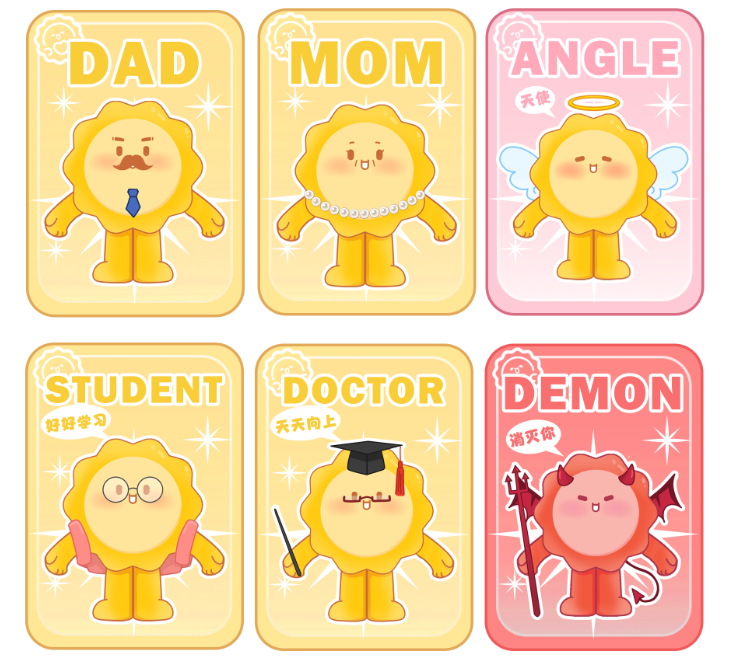
I also developed a series of related characters—parents, friends—adding different colors and small elements while keeping the same basic style. This made the characters feel like a family visually and strengthened the brand identity of the project.
Industry Insights and Research
According to Character Design Quarterly (2024), effective character design should be readable at a glance and adaptable for both 2D and 3D animation.
Production designer Ralph Eggleston also emphasized that design choices should support storytelling through shape and color, rather than just surface detail.
Skills and Workflow in Character Design
- understanding of shape language and color psychology
- storytelling ability
- animation awareness
- collaboration with other departments
The workflow often includes script analysis, mood boards, sketches, turnarounds, expressions, and final model sheets.
Reflection and Career Direction
Working on character design made me realize how this role mixes creativity, storytelling, brand building, and technical thinking.
It can be challenging, but it also feels incredibly rewarding when a character connects emotionally with the audience.
References
Character Design Quarterly. (2024). Beyond the Silhouette. Issue 42.
Barbagallo, R. (2009). Design With a Purpose: An Interview with Ralph Eggleston. Animation Art Conservation.
Hart, J. (2008). The art of the storyboard: A filmmaker’s introduction. Elsevier/Focal Press.
Leave a Reply